
Guide | By Jivani Diamonds |
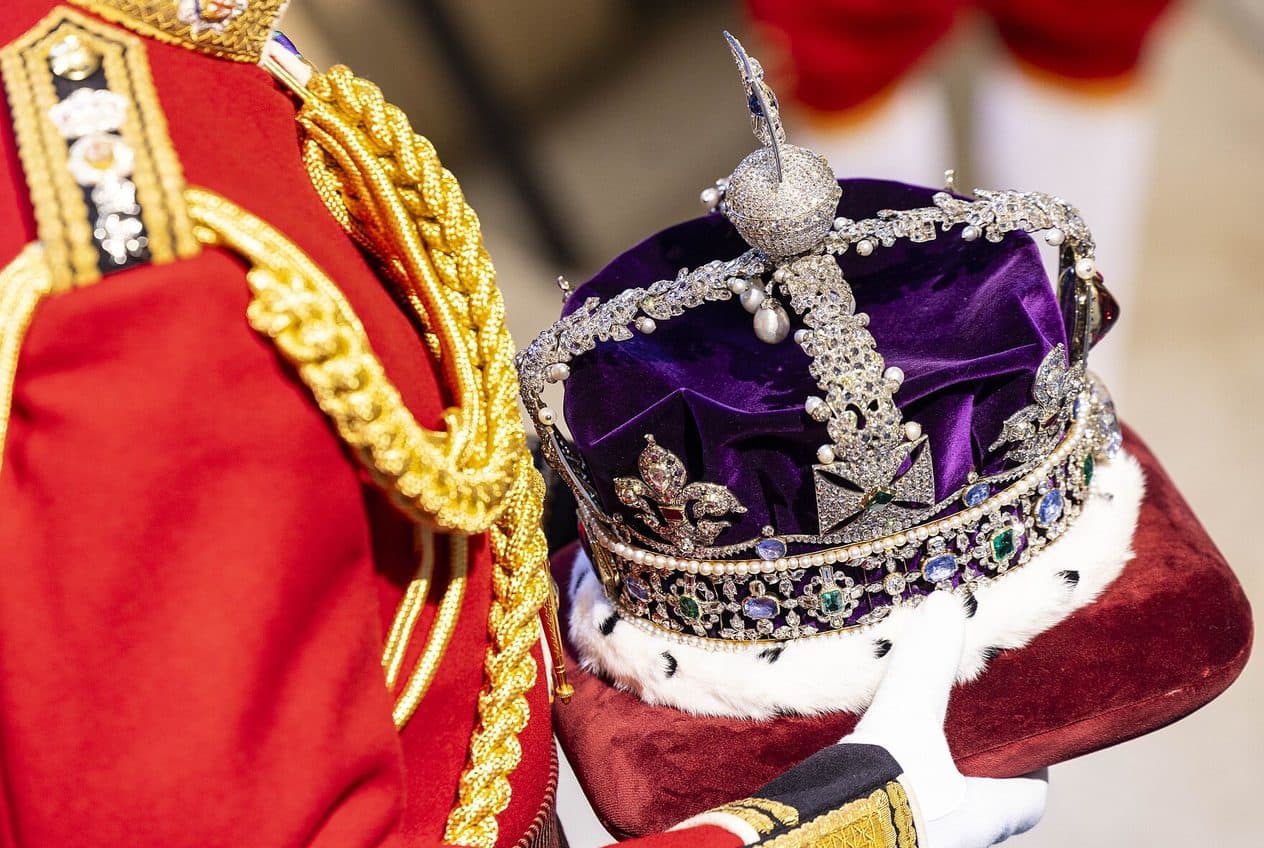
Photo: Roger Harris/House of Lords, CC BY 3.0, via Wikimedia Commons (cropped)
Of all the diamonds ever found, one stands apart for its size. The Cullinan was a rough diamond of 3,106 carats, the largest gem-quality rough diamond ever discovered. Its story shows how much work lies between a rough stone and a polished diamond.
Found in 1905
The Cullinan was found on 26 January 1905 at the Premier Mine near Pretoria in South Africa. Some sources give a slightly different date or weight, so the details vary a little between accounts. At about 621 grams it was larger than a human fist. It was bought by the Transvaal government and presented to King Edward VII of Britain.
Cut into nine major stones
Cutting such a large stone was a high-stakes task. The rough was cleaved and then cut and polished by the firm of Joseph Asscher in Amsterdam, producing nine major diamonds and many smaller ones. Studying a rough stone before it is cut is still the first step today, as we explain in how diamonds are polished.
- Cullinan I, about 530 carats, is the largest of the cut stones and is set in the Sovereign's Sceptre with Cross.
- Cullinan II, about 317 carats, is set in the Imperial State Crown.
Both are part of the Crown Jewels of the United Kingdom. Exact weights differ slightly between sources.
What it teaches us about every diamond
The biggest polished stone from the Cullinan weighs about one sixth of the original rough. That is normal. A polished diamond usually weighs well under half of the rough it came from, which is one reason carat weight is priced so carefully. The same idea applies to the diamonds in your jewellery: the weight and the quality both come from what the cutter makes of the rough.
Today, most of the world's rough is cut in cities such as Surat and Mumbai. Jivani Diamonds has been manufacturing since 1985. Follow a diamond's path in our loose diamond journey from mine to masterpiece.