True value
The 4Cs are the shared language of every loose diamond. What each one means, and how it shapes the look and price of a stone.
The 4Cs are cut, colour, clarity and carat weight. Independent laboratories such as GIA and IGI grade polished diamonds on these four qualities, and every loose diamond report is built around them. Together they decide how a diamond looks and what it costs.
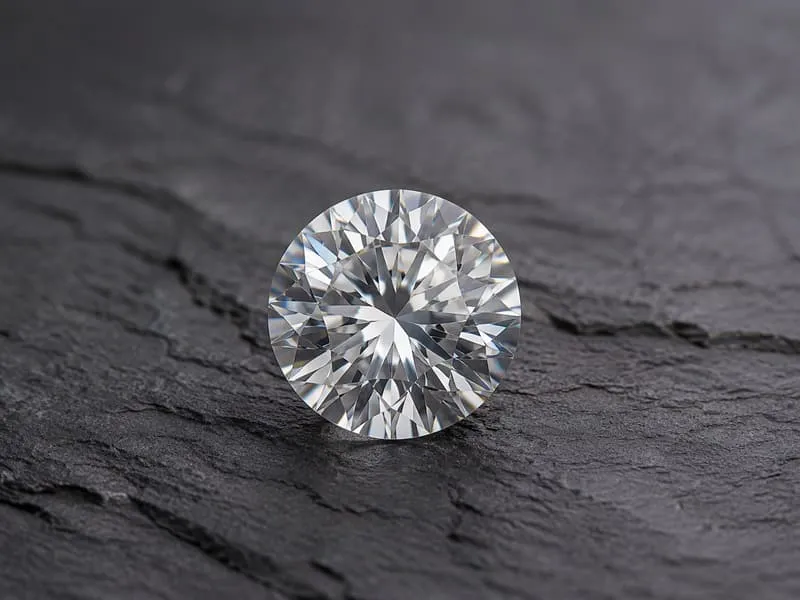
Cut is the quality of a diamond's proportions, symmetry and polish. It controls how light enters the stone, reflects inside it and returns to the eye as brightness, fire and sparkle. For standard round brilliant diamonds, GIA grades cut from Excellent to Poor. A well cut stone looks lively even if its colour or clarity is modest, and a poorly cut one looks dull even if it is otherwise high grade.
Cut is the one C that depends on the skill of the manufacturer rather than on nature. That is why a loose diamond manufacturer's planning and polishing matter so much. Read how it is done in the full loose diamond journey, or see our natural round brilliant diamonds.
Colour grading measures how colourless a white diamond is. The scale runs from D, which is colourless, to Z, which has a light yellow or brown tint. Grading is done by comparing the stone against master stones under controlled lighting.
| Grade | Range | What it means |
|---|---|---|
| D, E, F | Colourless | No visible colour. The highest colour grades. |
| G, H, I, J | Near colourless | Colour is hard to see once the diamond is set. Popular for value. |
| K, L, M | Faint | A slight warm tint can be seen, especially in larger stones. |
| N to R | Very light | Colour is easy to see. |
| S to Z | Light | Clear yellow or brown tint. |
Clarity describes the internal characteristics, called inclusions, and the surface marks, called blemishes, of a diamond. Graders assess them under 10x magnification and give a grade from Flawless to Included. Most natural diamonds have some inclusions, and many are too small to see without magnification.
| Grade | Name | What it means |
|---|---|---|
| FL | Flawless | No inclusions or blemishes visible under 10x magnification. |
| IF | Internally flawless | No inclusions, only minor surface blemishes. |
| VVS1, VVS2 | Very, very slightly included | Inclusions are very hard to see under 10x. |
| VS1, VS2 | Very slightly included | Minor inclusions, seen with effort under 10x. |
| SI1, SI2 | Slightly included | Inclusions are noticeable under 10x and sometimes to the eye. |
| I1, I2, I3 | Included | Inclusions are usually visible to the eye. |
Carat is a measure of weight, not size. One carat equals 200 milligrams, or 0.2 grams, and is divided into 100 points. Two diamonds with the same carat weight can look different in size depending on how they are cut. Prices often step up at round weights such as 1.00 carat, so buyers sometimes choose a stone just under a milestone.
For approximate diameters by weight, see the size table on our round brilliant diamonds page.
No single C tells the whole story. A strong cut can make a lower colour or clarity grade look excellent, and a high clarity grade adds little if the stone is poorly cut. Jewellers usually decide which Cs matter most for the piece and the customer, then look for the best balance at that budget.
A grading report records the 4Cs, measurements and other details of a loose diamond. Jivani Diamonds supplies diamonds accompanied by GIA and IGI grading reports. Learn more about GIA and IGI certified loose diamonds or send an enquiry with the grades you need.
Many jewellers put cut first, because it controls how bright and lively a diamond looks. The right balance depends on the budget and the piece, so all four Cs matter.
D to F are colourless and G to J are near colourless. Near colourless stones often look white once set and can offer good value, especially in yellow or rose gold.
An eye clean diamond has no inclusions that can be seen with the naked eye. Many diamonds in the VS and SI clarity ranges can be eye clean, so grade alone does not tell the whole story.
A carat is a unit of weight equal to 200 milligrams. One carat is divided into 100 points, so a 0.50 carat diamond weighs 50 points.
A report from an independent laboratory states the stone's 4Cs so everyone relies on the same description. Jivani Diamonds supplies diamonds accompanied by GIA and IGI grading reports.