A loose diamond travels a long way before it reaches a jeweller's bench. Here is the full journey of a natural diamond, from the mine to a certified, polished stone, and how Jivani Diamonds manufactures and supplies loose diamonds from Surat and Mumbai.
In short: a rough diamond is mined, recovered from ore, sorted, planned, cut, shaped, faceted, polished, inspected and graded. Only then is it a finished loose diamond that can be sold to jewellers, wholesalers and exporters. The sections below explain each stage.
01Mines: where natural diamonds begin
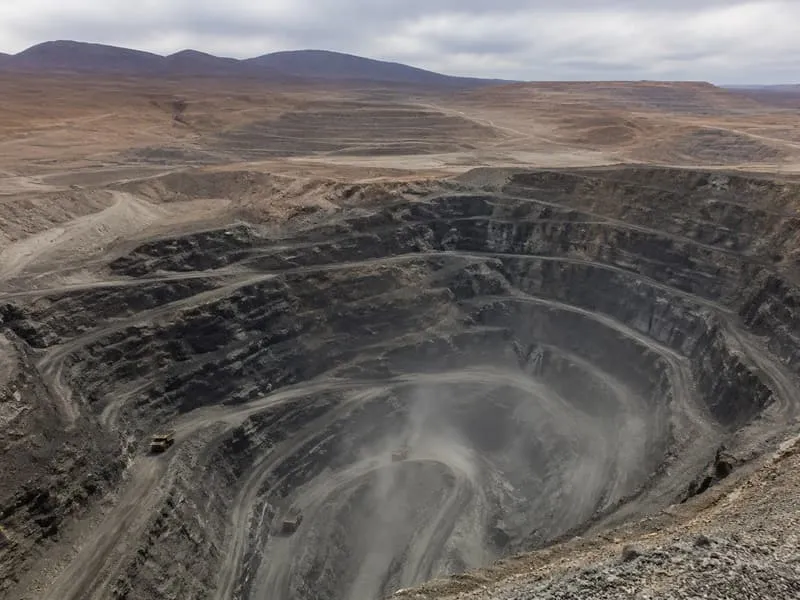
Natural diamonds form deep inside the Earth, around 150 kilometres below the surface, where carbon is exposed to extreme heat and pressure for more than a billion years. Volcanic eruptions later carry the diamonds upward inside a rock called kimberlite, which is why many diamond mines are built around these volcanic pipes.
Diamonds are also found in river and coastal gravels, known as alluvial deposits. Open-pit and underground mines in Africa, Russia, Canada and Australia supply a large share of the world's rough diamonds, and every natural loose diamond in a jewellery shop started its life in a place like this.
02Recovery: separating rough diamonds from ore
Diamonds are a tiny fraction of the rock that leaves a mine, so the ore is crushed, washed and passed through a series of separation steps. Heavy-media separation uses the fact that diamonds are denser than most surrounding rock, and X-ray sorters pick out stones because diamonds glow under X-rays. Grease tables are another classic method, since diamonds stick to grease while most other minerals wash away.
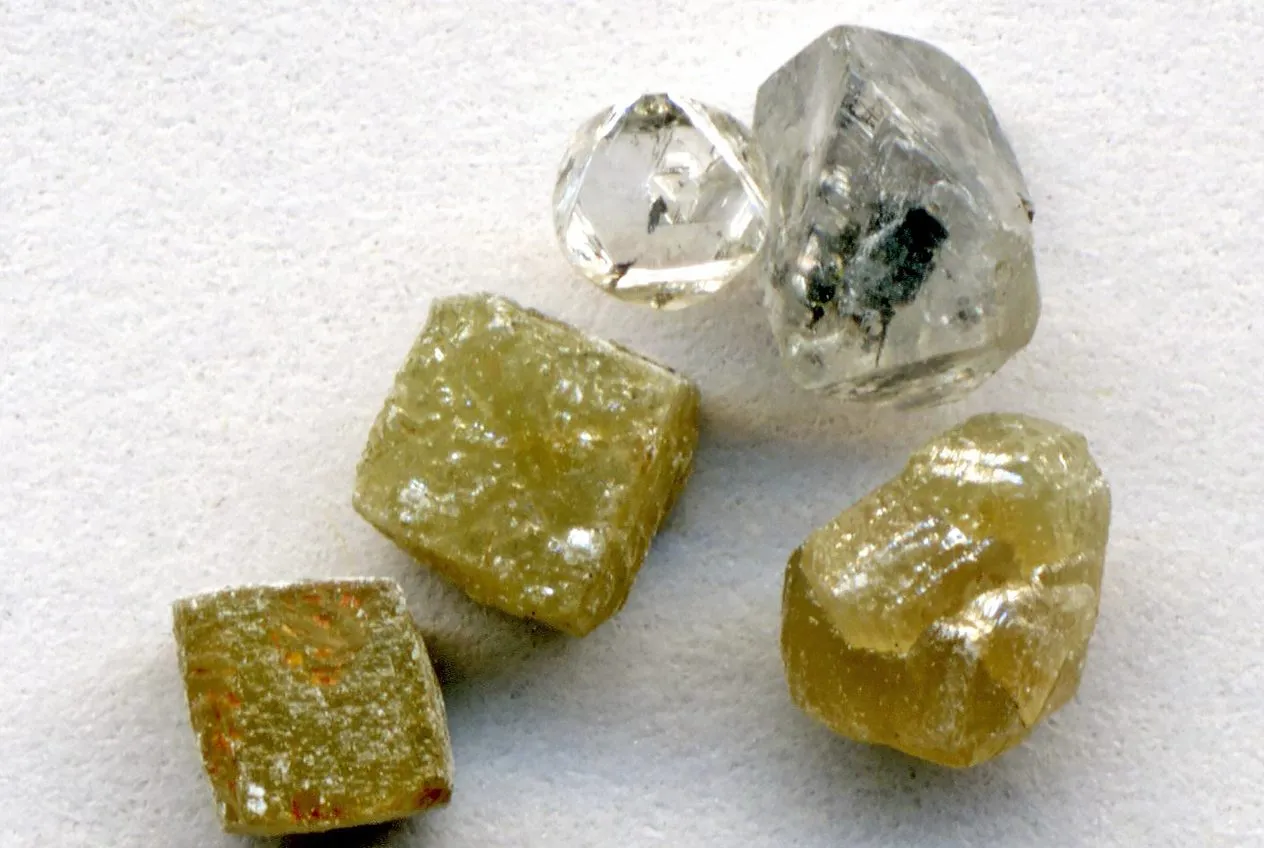
Recovered rough diamonds are cleaned and sent for sorting and sale. At this stage they look nothing like the polished diamonds in jewellery. They are usually dull, frosted or irregular crystals.
03Rough selection: choosing diamonds worth manufacturing
Rough diamonds are sorted by size, shape, colour and quality, then sold to manufacturers through tenders, sights and trading houses. Choosing rough is one of the most important decisions in diamond manufacturing, because the buyer has to judge what finished stones the rough will yield before a single cut is made.
Rough diamonds traded internationally are covered by the Kimberley Process Certification Scheme, which was created to keep conflict diamonds out of the legitimate supply chain. Because our speciality is the natural round brilliant, the ideal rough for Jivani Diamonds is a stone that can be planned into a well proportioned round diamond.
04Planning and mapping: designing the cut
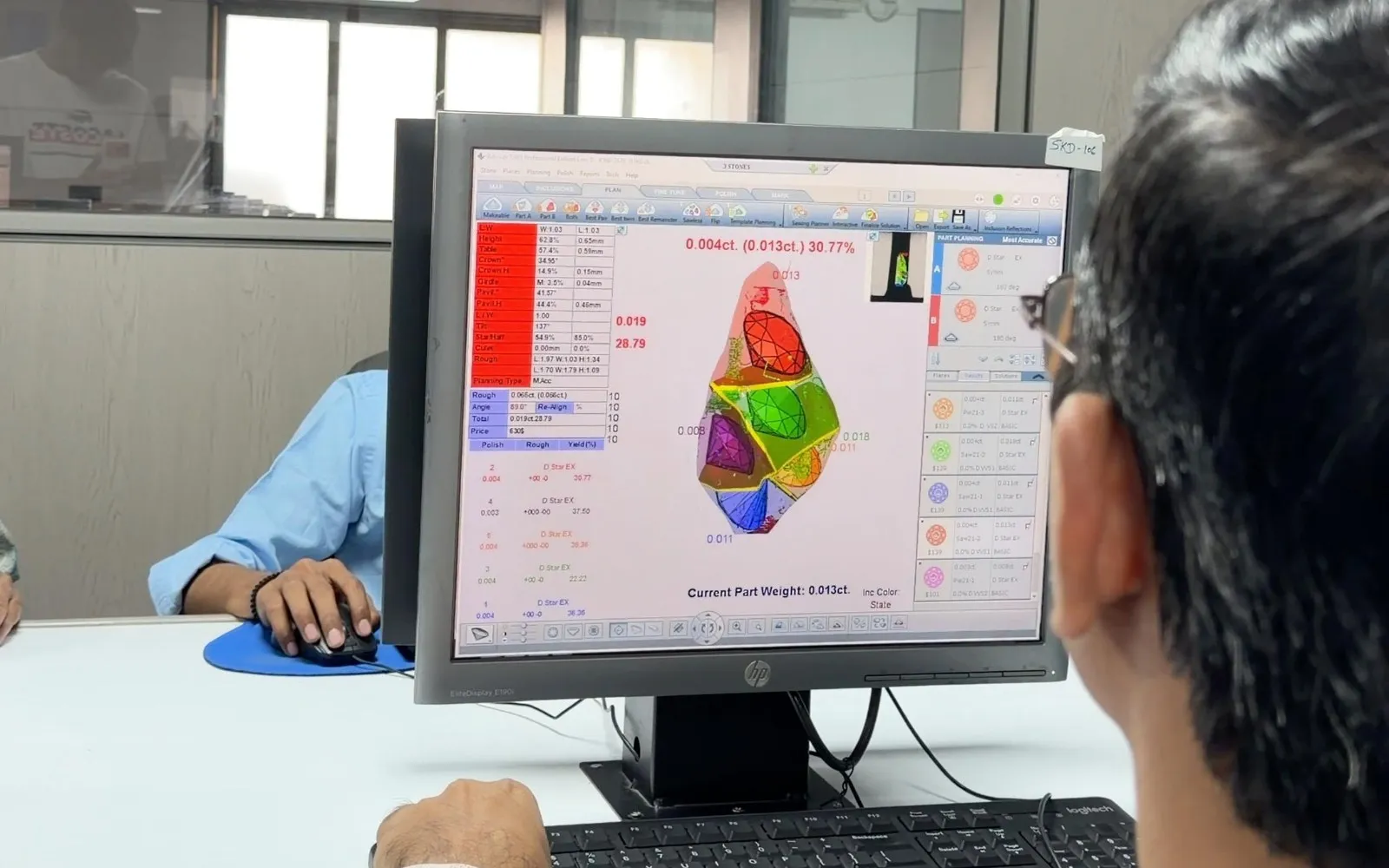
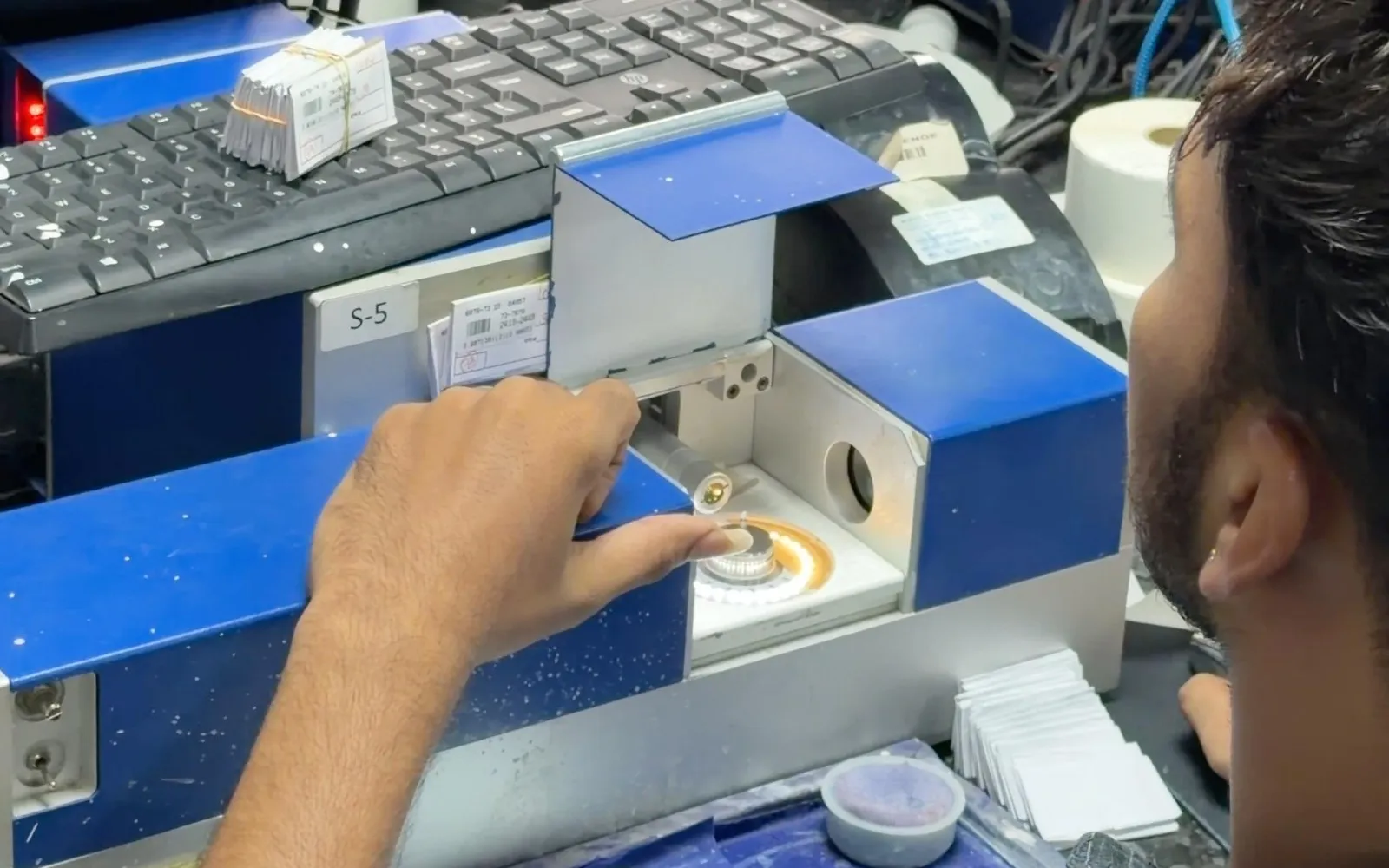
Before cutting, the rough diamond is scanned and mapped. Advanced scanners record the stone's outline and any inclusions, and planning software builds a three-dimensional model so the planner can compare different ways to cut it. The aim is to balance finished weight, clarity, colour and shape. A polished diamond often weighs less than half of the rough it came from, so good planning protects both value and yield.
The planner also decides where the stone will be divided and in which direction it will be polished, following the diamond's internal crystal grain. A careful plan reduces risk later in the process and gives the best chance of producing a high quality round brilliant.
05Sawing and laser cutting: dividing the rough diamond
Diamond is the hardest natural material, so it is divided with specialised tools. Lasers cut the rough along the planned line, and traditional sawing uses a thin blade coated with diamond powder. Some stones are cleaved instead, which means splitting them along a natural plane of the crystal.
Each piece becomes a separate stone, so this stage turns one rough diamond into one or more pieces ready for shaping. Precision matters, because a cut made in the wrong place cannot be undone.
06Shaping and bruting: forming the round outline
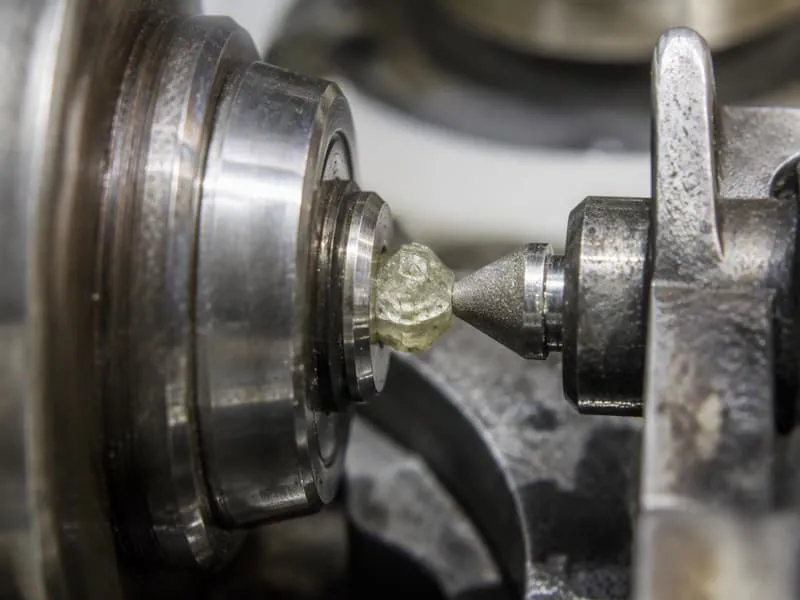
Bruting, also called girdling, gives the stone its outline. For a round brilliant, each piece is rotated against a hard cutting tool or against another diamond until it becomes round. Modern machines do this with great precision.
The result is a rounded, grey looking stone with no facets yet, ready for the stage that creates its sparkle.
07Faceting: cutting the round brilliant
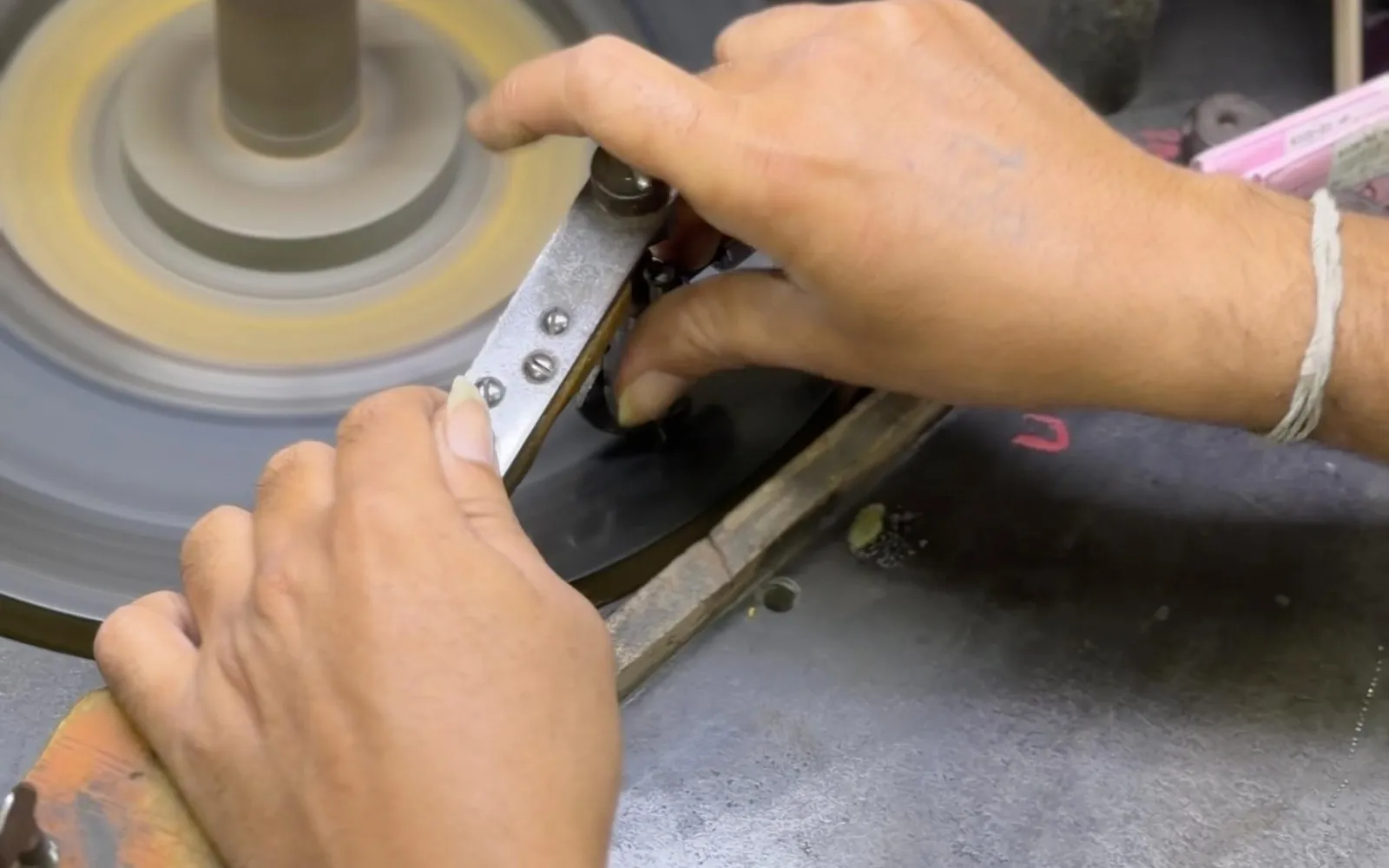
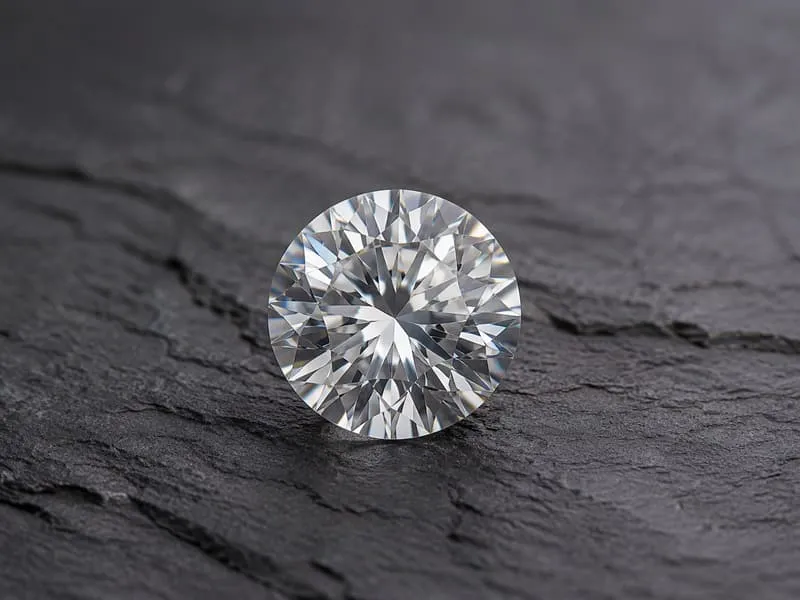
Faceting is where the stone starts to look like a diamond. The cutter first blocks the main facets and then adds the rest until the stone is complete. A standard round brilliant diamond has 57 facets, or 58 if it has a small culet at the point.
The angles and proportions of those facets decide how light enters the stone, reflects inside it and returns to the eye as brilliance, fire and scintillation. This is why cut is often called the most important of the 4Cs.
08Polishing: giving polished diamonds their sparkle
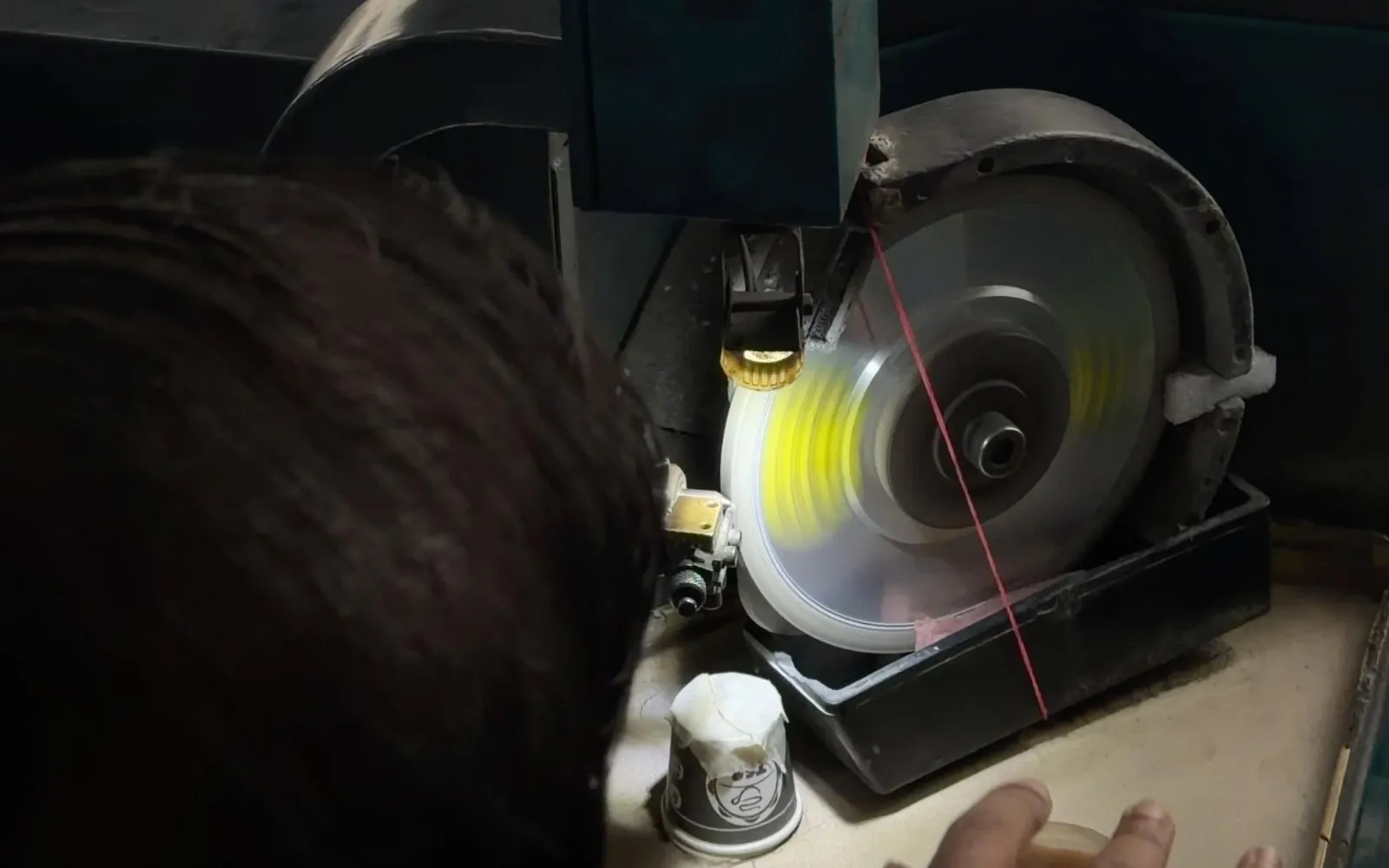
Each facet is polished on a rotating wheel called a scaife, which is coated with fine diamond powder. The polisher has to follow the crystal's grain direction, because polishing against it makes a facet hard to finish.
Repeated polishing removes fine marks, sharpens the edges between facets and brings out the sparkle buyers expect from polished diamonds. Symmetry and polish quality are later recorded in the grading report.
09Quality control: inspecting every loose diamond
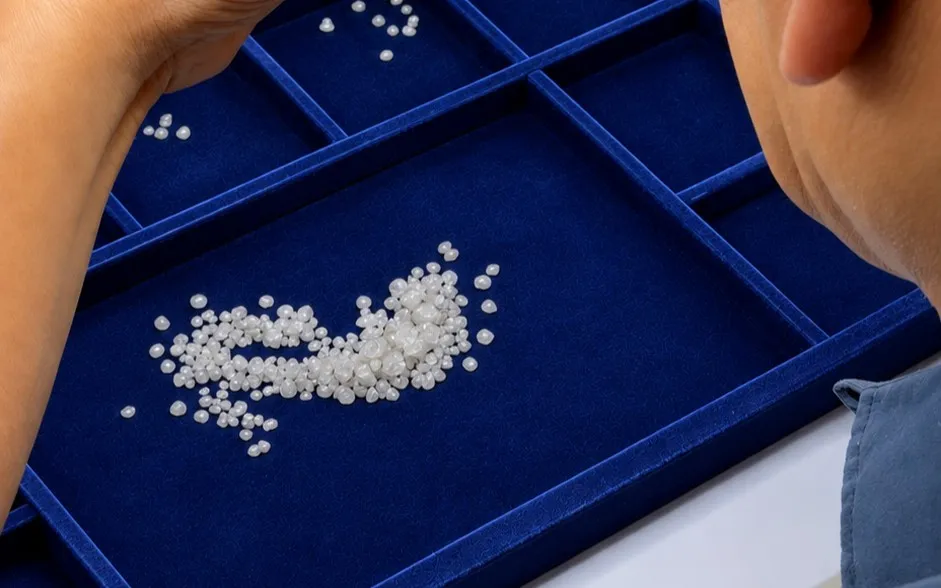
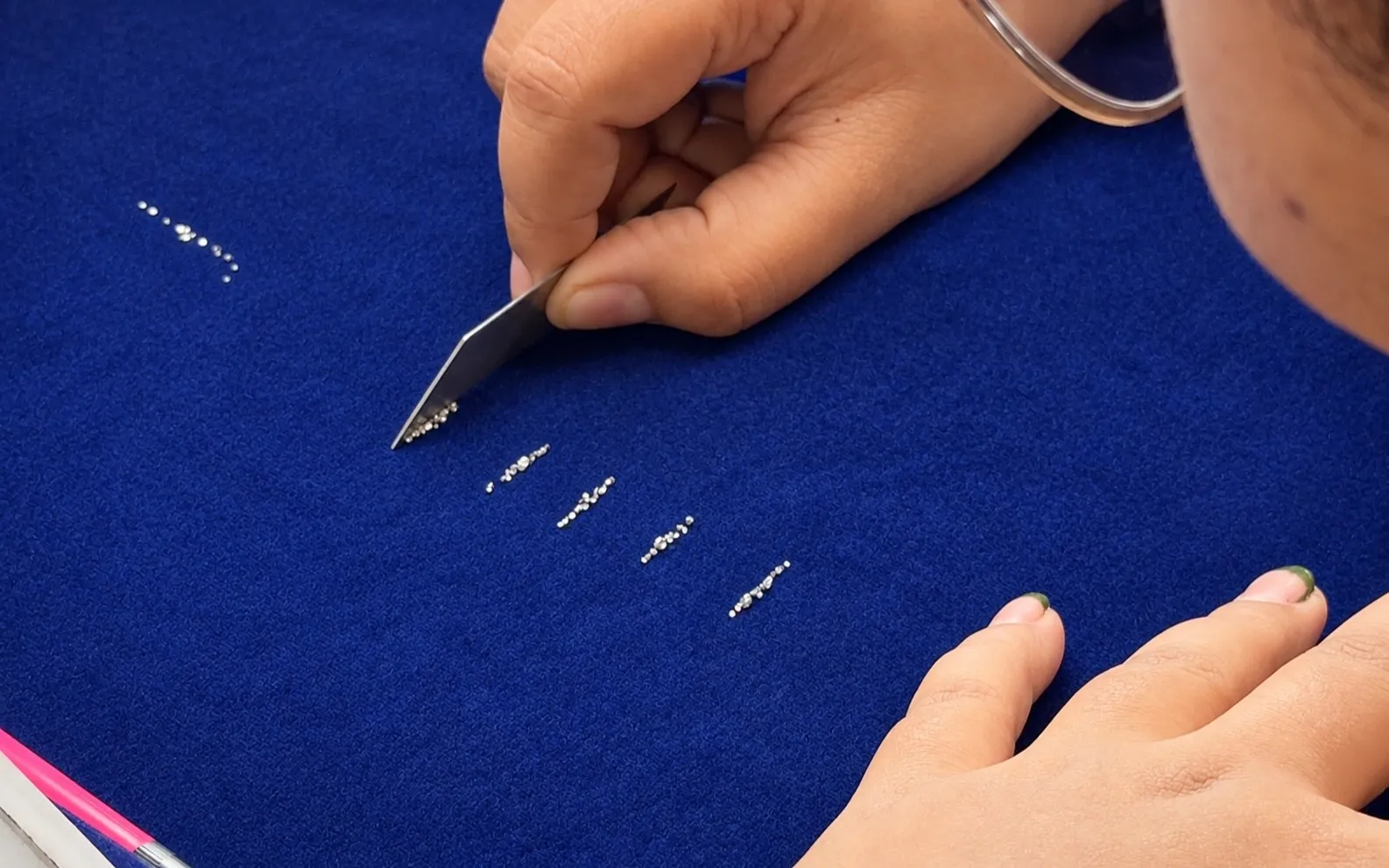
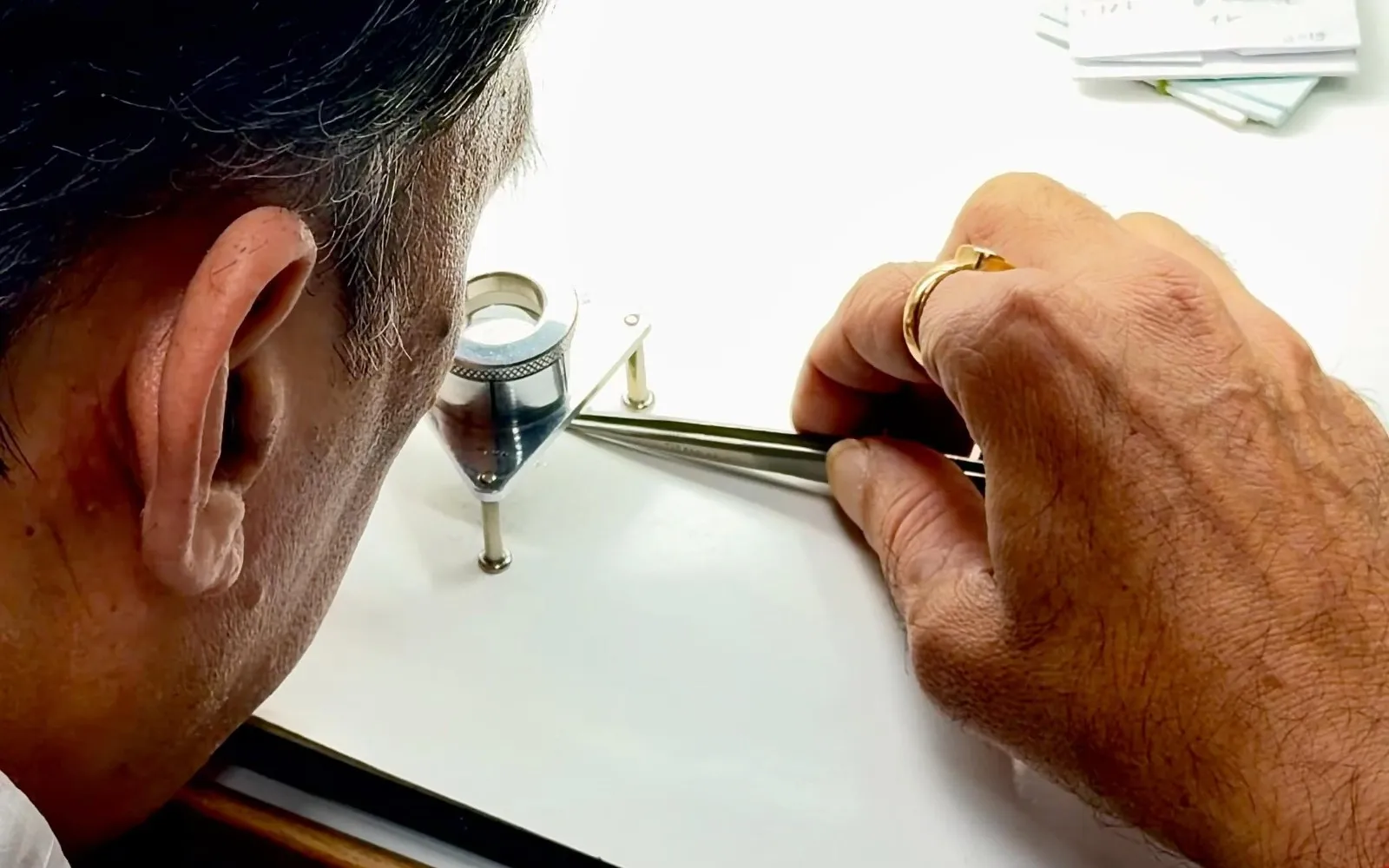
Finished loose diamonds are cleaned and inspected under a 10x loupe and a microscope. Inspectors check proportions, symmetry and polish, and grade colour and clarity. Stones are weighed and measured, then sorted by shape, size and quality.
Careful sorting is what allows diamonds to be offered as consistent parcels, so a jeweller or wholesaler can receive stones that match each other.
10GIA and IGI certification: independent grading
Independent gemmological laboratories such as GIA and IGI grade polished diamonds on the 4Cs: cut, colour, clarity and carat weight. The grading report states these details, so the buyer, the jeweller and the end customer can all rely on the same description. Many certified diamonds also carry a tiny laser inscription of the report number on the girdle, which links the stone to its report.
Jivani Diamonds supplies diamonds accompanied by GIA and IGI grading reports. Read more about GIA and IGI certified loose diamonds.
11The masterpiece: finished loose diamonds ready for jewellery
The finished product is a polished natural round brilliant diamond: a loose diamond ready to be set into a ring, pendant, earrings or any custom piece. Loose diamonds are packed into parcels, sold to jewellers, retailers and wholesalers, and shipped around the world.
Jivani Diamonds supplies loose diamonds from offices in Surat and Mumbai. Browse our natural loose diamonds or send an enquiry for availability and pricing.
Diamond manufacturing and export from Surat and Mumbai
Surat is one of the world's largest centres for cutting and polishing diamonds, and Mumbai is a major hub for diamond trading and export. Together they connect rough supply, skilled craftspeople and international buyers, which is why so many polished diamonds reach jewellery markets around the world from these two cities.
Jivani Diamonds has worked in the diamond industry since 1985 and operates from offices in Surat and Mumbai. Learn how we manufacture on our loose diamond manufacturing page, or see our wholesale loose diamonds and export page for parcels.